

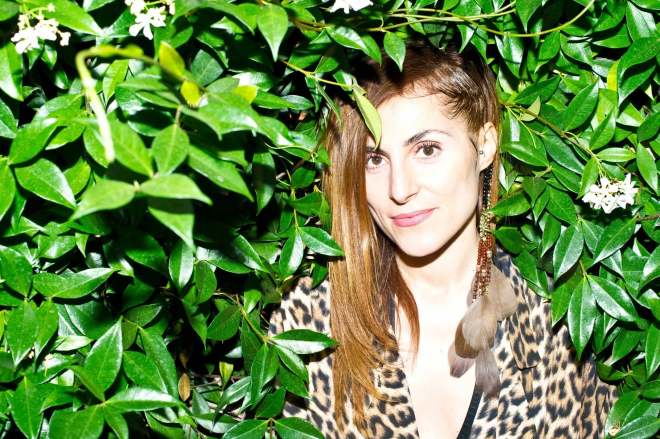
On Thursdays, Del Osei-Owusu sits down with artists on the FOTN radar and gets them to tell their origin story over a cup of tea and biscuits. This week, Irene Serra is in the hotseat and she brought Oreos.
Hello Irene, how are you?
Hello Del! I’m very well, thank you. Quite busy because my album launch is in a
week and a half and the album comes out on the 23rd of October, so there’s lots
happening, but in a good way! I always enjoy this phase of an album release, when everything starts coming together. A lot of the merch arrived a couple of weeks ago, and having it physically in my hands makes it all feel real. And the sun is shining in London, which always puts me in a great mood.
Congratulations on making the faves with On Shoulders of Giants, how does it
feel?
It’s always lovely to know your music is being appreciated, and especially with this album, which is a bit of a departure from the sound of my previous four albums. I was really excited to share the new songs, but I didn’t quite know how they were going to land. They’ve been getting a lot of love, and knowing that On Shoulders of Giants made the Fresh Faves through the public vote made it feel extra special.
What’s the story behind the song?
There were quite a few things I was thinking about when I wrote this song, but the starting point was my love for the mountains. I’d been learning about the great mountaineers of the past and the incredible things they achieved, and I keptthinking: my God, how much harder must it have been back then? No phones, no helicopters to come and rescue you, and much more basic gear. The strength and courage it must have taken to venture into the unknown—sometimes losing their lives in the process—really stayed with me.
That got me thinking more generally about how we’re always standing on the
shoulders of the people who came before us. When a movement takes hold, or we
look back at what seems like a pivotal moment, there have usually been lots of
people quietly laying the groundwork for years. Often, they’re people whose names we’ll never know.
I think that’s true in music and in politics, too. So the song grew out of that idea, with those mountaineers as a metaphor: the people who paved the way and made it possible for the rest of us to go a little further and for real change to happen.
It’s from your new album due out in October, what’s it been like recording it?
Recording this album was such a special experience for me. We spent two days at
Real World Studios near Bath, Peter Gabriel’s studios, and it’s a beautiful, inspiring place. You stay there, sleep there, eat there, so you’re completely immersed in the recording. I loved that.
We were also very lucky to have Katie May engineering it. She’s wonderful, and we just had a brilliant time. We arrived well rehearsed, so it was really about bringing the songs to life and leaving room for whatever might happen in the moment. We’re jazz musicians at heart, so there’s always a little open space for that, and Real World felt like a lovely place to explore it.
I think those were some of my favourite days of making music.
It’s your fifth album, what have you learned about yourself since recording your first one?
I recorded my first album more than 15 years ago, so I’ve grown a lot as a person and as a musician. I’ve always had a vision and trusted myself enough to follow it, but I definitely think that trust is stronger now.
One of the biggest things I’ve learned is to let go of the idea of the perfect take. On this album, I kept some takes that perhaps weren’t quite as clean vocally as others, but when you listened to the whole song, they just felt better. There was more feeling there.
I’m much more comfortable leaving those imperfections in now. They make the
music feel human, relatable and vulnerable, which is really what making music is about for me—that messy, imperfect experience of being human that we can all
relate to. And something that AI will hopefully never be able to replicate!
Has anything changed in your writing process in that period of time?
Quite a bit has changed! On my previous albums, a lot of the music was co-written with bassist Richard Sadler or drummer Chris Nickolls, although I also wrote songs on my own. The lyrics have always been mine. This album is mostly songs I’ve written myself, with two co-writes with Richard.
Co-writing is wonderful because having someone else’s input can be really
inspiring. Writing both the music and lyrics myself has felt like a deeper dive into my own musical universe, which has been really interesting, gratifying and
sometimes surprising.
My process is quite organic. At the beginning, I try to get everything out without judging it, then see how the songs unfold. I also practise songwriting by writing a lot. I trust that if I turn up and do the writing, a song will eventually show itself. It won’t always be an amazing song, but that doesn’t mean it doesn’t need to be written! Sometimes you have to write quite a few songs that aren’t your best work to get to the ones you really love. All that writing is part of the journey, and I feel it’s brought me to a collection of songs I really love on this album.
What’s your favourite track from it?
Hmm, that’s a difficult question! Different tracks mean different things to me, so it depends on the day, but I think I’d probably choose Animal.
It was one of those songs that almost wrote itself. I had the initial idea and it came out quite quickly. That doesn’t happen very often, but sometimes it does! In retrospect, I realised it was about my mother, who I’d recently lost at that point.
It was also the moment when I thought,
“Okay, this is going to be part of my next
album.”
Everything grew from Animal onwards, really. So besides being very
important to me emotionally, it was a pivotal moment in my creative vision for the album coming together.
What’s been the easiest and most challenging part of recording it?
The easiest part was bringing the songs to the band and rehearsing them. I had a real sense that they were strong because they sounded good almost straight away, even on the first playthroughs. Sometimes you have to work quite hard to get a song where you want it, but these just seemed to play themselves. Hearing the bare bones of what I’d written come to life with the musicians was lovely.
The most challenging part was translating the bigger sound I could hear in my
head. Our core line-up is voice, guitar, bass and drums, but I wanted to build on that with electronic textures. So there was a lot of experimenting with my vocal effects unit and synth, and with drum pads and effects pedals across the band.
I also arranged and layered a lot of vocals, sometimes five or six vocal harmonies. Bringing all those elements together so they sounded like the soundscape I’d imagined was the biggest challenge. The songs themselves came together quite naturally; finding that extra dimension took more exploring.
You’ve been away eight years, what brought you back into the fold?
I didn’t really disappear, more like quietly working away in the background. I
released Requiem for the Faithful just before COVID, followed by a remix album
two years later, and I’ve continued performing as a jazz vocalist and making and recording other music. But after that third album, I knew there was another sound I wanted to explore that wasn’t quite coming through yet.
So this became a period of experimentation. I kept writing, playing around and
giving myself space to discover where the music wanted to go. When Animal and a
few of the other songs came along, I started to think,
“Okay, this is where the music
should be. This is the next album.”
I think we have to allow ourselves that space as musicians and creatives, because we’re always changing. I didn’t want to record another album simply because two or three years had passed. I could feel a change happening in myself and in the music I wanted to make, and I wanted to explore that. Eventually, though, you have to take your little basket of musical ideas and commit: “Right, let’s record and release this!” Finishing can sometimes be the hardest part. By the time an album comes out, you might already have moved four or five steps beyond where you were when you made it, but you still have to finish the work and let those songs go out into the world. That’s what brought me back: feeling ready to commit to this next phase of my songwriting and see where these songs could go.
Was there anything that inspired you during that period to write?
Yes, definitely—the world, and how my relationship with it was changing. My
mother passed away, then came COVID, alongside so much political unrest,
conflict and war. A lot was happening both in my own life and in the world around
me.
I’m not sure “inspiration” is quite the word for all of it, but it certainly gave me a lot
to write about. These last eight years have been a period of great change for me, and music has been a way of trying to make sense of things that sometimes don’t really make any sense at all.
You’ve got an interstellar line up in the band for this recording, how did you put them together?
For this album, I brought in guitar instead of piano. That changed things quite a bit and really helped me find the sound I’d been looking for.
We’re all jazz musicians, and we met quite organically through the jazz scene. I’d played with each of them separately on different gigs, playing anything from jazz to Brazilian music. Getting to know them that way, I could hear something really special in each of their playing.
They can move between genres so well, but they also have so much character—
you can really tell it’s them when they play. That combination made me feel they’d be perfect for bringing my music to life. I feel very lucky to play with them. They’re fantastic musicians and add so much to the songs.
What are you listening to at the moment?
I’ve been making a point of listening to full albums lately. One I’ve had on a lot is Sara Bareilles’s Good Grief, which came out in August. The songwriting is fantastic — she’s such a strong lyricist—and I love hearing those jazz-adjacent musicians on it.
I’ve also been listening to Gretchen Parlato’s The Wise Ones. It’s such a beautiful, eclectic vocal jazz album. The way she uses her voice, the arrangements, the mix of originals and covers, and all those wonderful guests—it’s very inspiring.
And I always, always come back to jazz. I’m constantly listening to and learning new tunes for my jazz gigs, and lately I’ve been listening to a lot of Dinah Washington. She’s a phenomenal jazz vocalist, but I also love how she sang across so many other genres. So those are my current musical obsessions!
What are you looking forward to doing in the next 12 months?
I’m really looking forward to gigging the album and bringing the music to new
audiences. I’m also excited to see how the songs grow and change as we play
them live—they always do, and that’s a lovely part of the process. The other thing is having more space to focus on writing again. I keep writing even while recording and releasing an album, but I’m looking forward to getting back into that phase of exploration, where I allow myself to try lots of different things and see where they lead. It’s one of my favourite parts of making music.



Enjoyed reading your interview with Irene, Del. Lots of great insights into the music of ISQ. I was fortunate to attend ISQ’s album launch earlier this month and wrote about it here – https://www.fifty3.net/single-post/fifty3fridays-isq-the-silence-is-deafening-live – a wonderful evening!